Your next customer may never visit your website. They may simply ask an AI tool instead. Buyers still use Google, but they are also using large language model (LLM)-powered tools such as ChatGPT and Gemini, as well as Google AI Mode, to ask questions about products, standards, applications, and regulations.
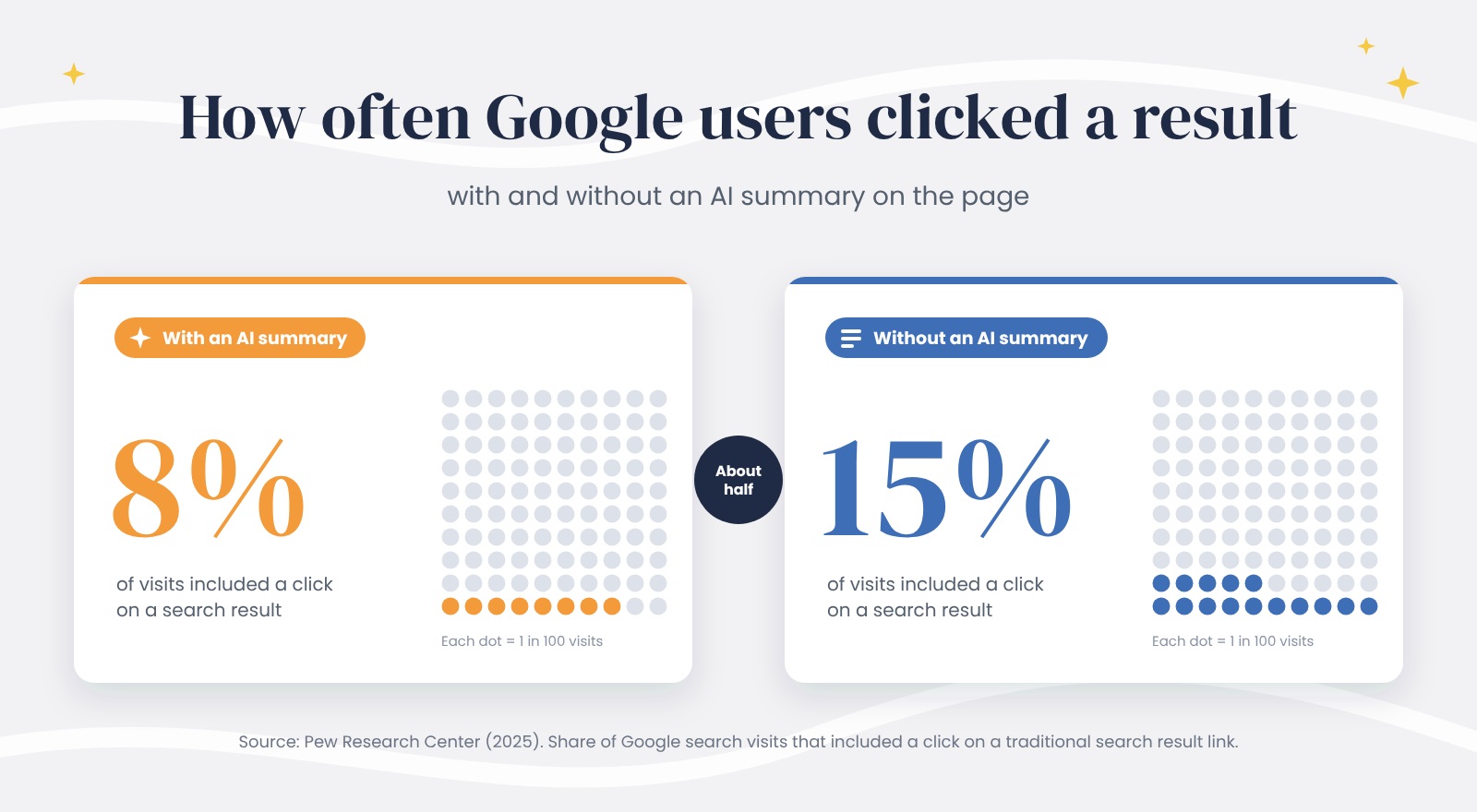
Google AI Overviews can answer many of those searches before someone clicks through to a website, which changes what search visibility looks like. A 2025 Pew Research Center study found that Google users clicked a traditional search result on 8% of visits when an AI summary appeared, compared with 15% when it did not. Ranking well still matters, but B2B science, technology, and healthcare marketers also need to know whether AI-generated answers use their expertise, how prominently their company appears, and how that visibility compares with familiar SEO measures such as rankings, impressions, clicks, and organic traffic.
AZoNetwork’s AI visibility reports add another layer of insight alongside your existing SEO metrics. They show where your brand appears in AI search, which content is being used, and where you have the clearest opportunities to improve your visibility.
Key Takeaways
- AI visibility shows whether your brand appears across ChatGPT, Gemini, Google AI Overviews and Google AI Mode
- Citations show when your content is used as a source for an AI-generated answer
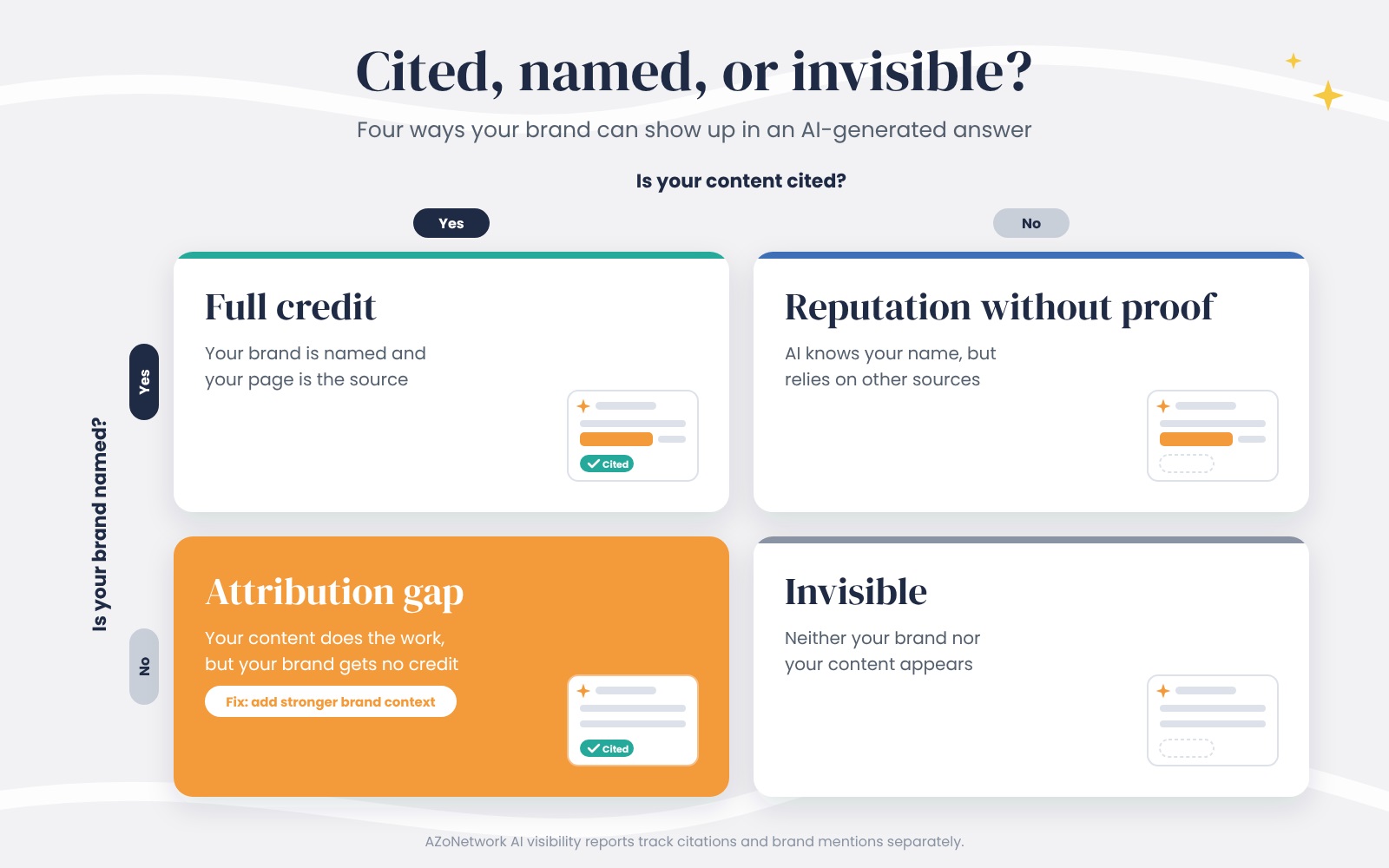
- Mentions show when your company is actually named within an output
- AZoNetwork’s AI visibility reports highlight competitor appearances, content gaps, regional differences, and strong-performing pages
- This data can help prioritise Generative Engine Optimisation (GEO) work
- SEO improves performance in search results, while GEO focuses on visibility in AI-generated answers, and together they support visibility across search and AI platforms
What Is an AZoNetwork AI Visibility Report?
An AZoNetwork AI visibility report is a visibility audit for generative search. It takes the kinds of questions buyers ask AI tools and checks whether your company shows up in the answers.
The report sits alongside your existing SEO analysis. It is not a replacement for it. SEO tells you how your website performs in search engines. The AI visibility report, meanwhile, tracks whether your brand, website, and content appear when buyers ask AI tools technical questions.
Good rankings don’t automatically mean strong AI visibility. A page may rank well in Google yet rarely appear in generated answers. Another page may be used as a source without naming the company. That’s why marketers need to measure AI visibility separately, so they can see where strong search performance carries over and where it doesn’t.
AZoNetwork’s broader SEO and GEO service strengthens both search rankings and AI visibility by improving traditional search visibility and making technical content easier for generative systems to understand, verify, and reference.
How Does the AI Visibility Report Work?
Each AI visibility report starts with relevant topics and buyer questions. We track these prompts across major AI platforms, including ChatGPT, Google AI Overviews, Google AI Mode, and Gemini, and, where useful, across different markets, to see whether your brand is named, cited, or absent from the answers.
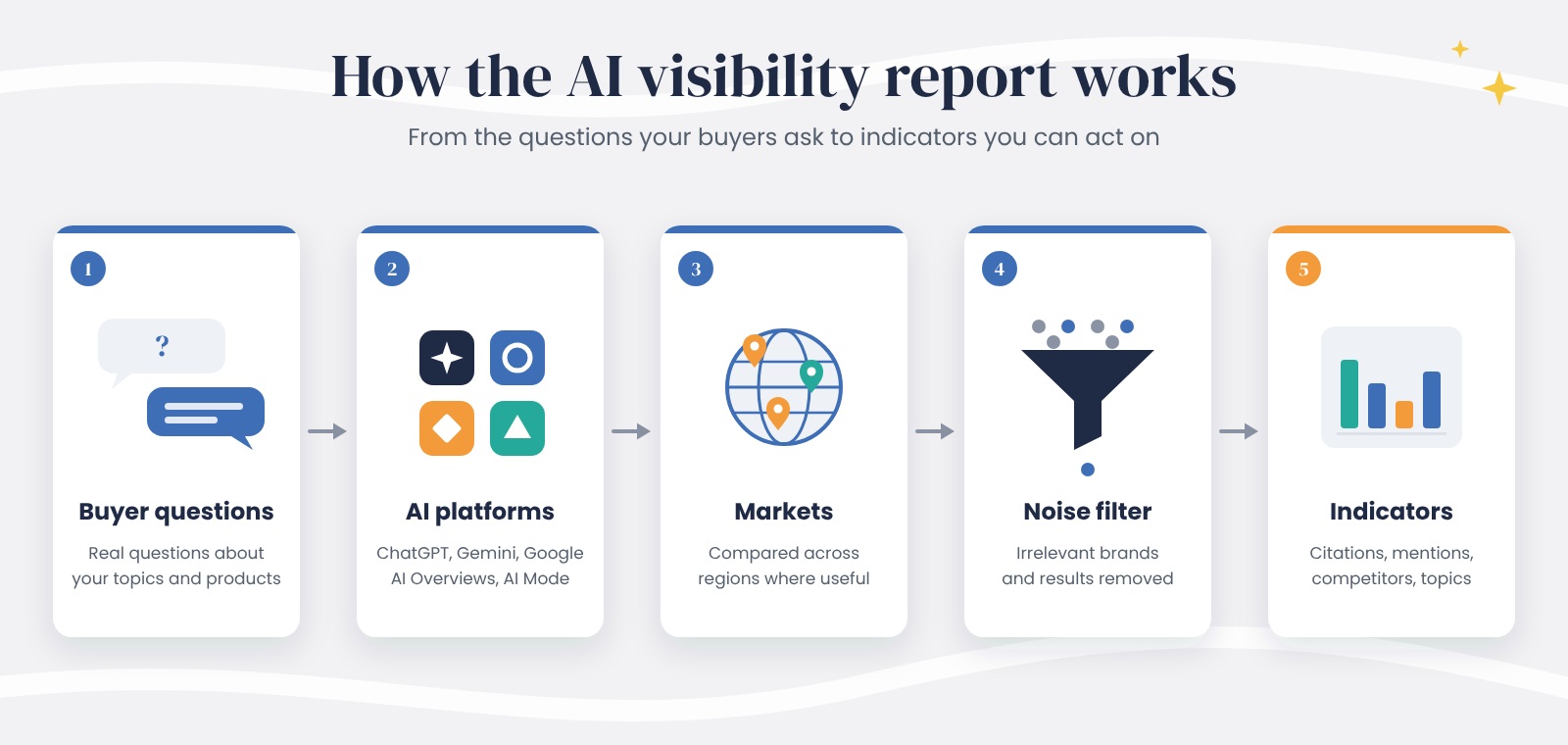
Instead of reducing your overall AI visibility to a single score, our AI visibility report breaks the data down into specific indicators. These include:
- Competitor activity
- Topic-level visibility
- Citation and mention rates
- Platform differences
- Regional patterns
- The content that is already performing well
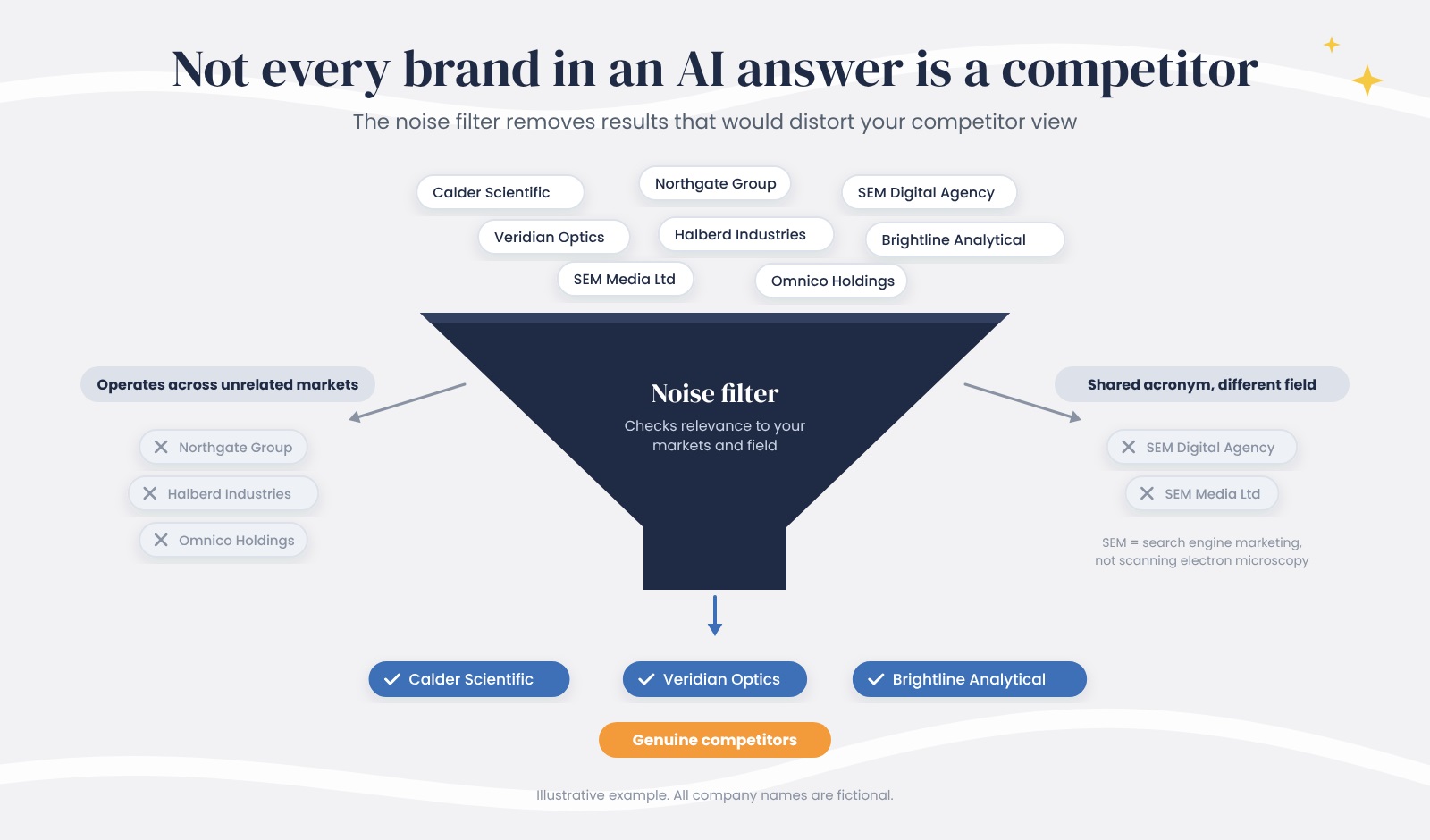
The analysis also filters out misleading results. Not every company or brand that appears in an AI response is necessarily a meaningful competitor. Sometimes a supplier shows up because it operates across several unrelated markets, or a shared acronym pulls in information from a completely different field. Removing that noise gives marketing teams a more realistic view of the competitors and questions that matter.
Looking at each AI engine separately is useful too, since what works well in one may not have the same impact in another. Our AI visibility report shows how your visibility can vary between platforms, including whether your pages are cited, your company is named, and which content formats appear in responses. This helps you identify where your brand already has a strong presence and where you can improve visibility.
What Does the AI Visibility Report Show You?
Our AI visibility report turns the data gathered from relevant buyer questions across major AI platforms into practical insights about your brand, content, and competitors. It can show you:
- Where your brand is mentioned: discover when your company is named directly in an AI-generated answer
- Where your content is cited: find out when one of your pages is used as a source, even when your company isn’t named
- Which formats perform best: identify the pages and content types that AI tools are already drawing from
- Where competitors appear: see which companies are being mentioned or cited for relevant topics when your brand is absent
- Where regional gaps exist: locate markets where your brand has limited presence or AI tools are relying on generic or third-party sources
Citations and brand mentions are tracked separately in the AI visibility report, helping you understand the role your content and brand play in AI-generated answers. The AI visibility report can highlight these attribution gaps and pinpoint content that could benefit from stronger brand context.
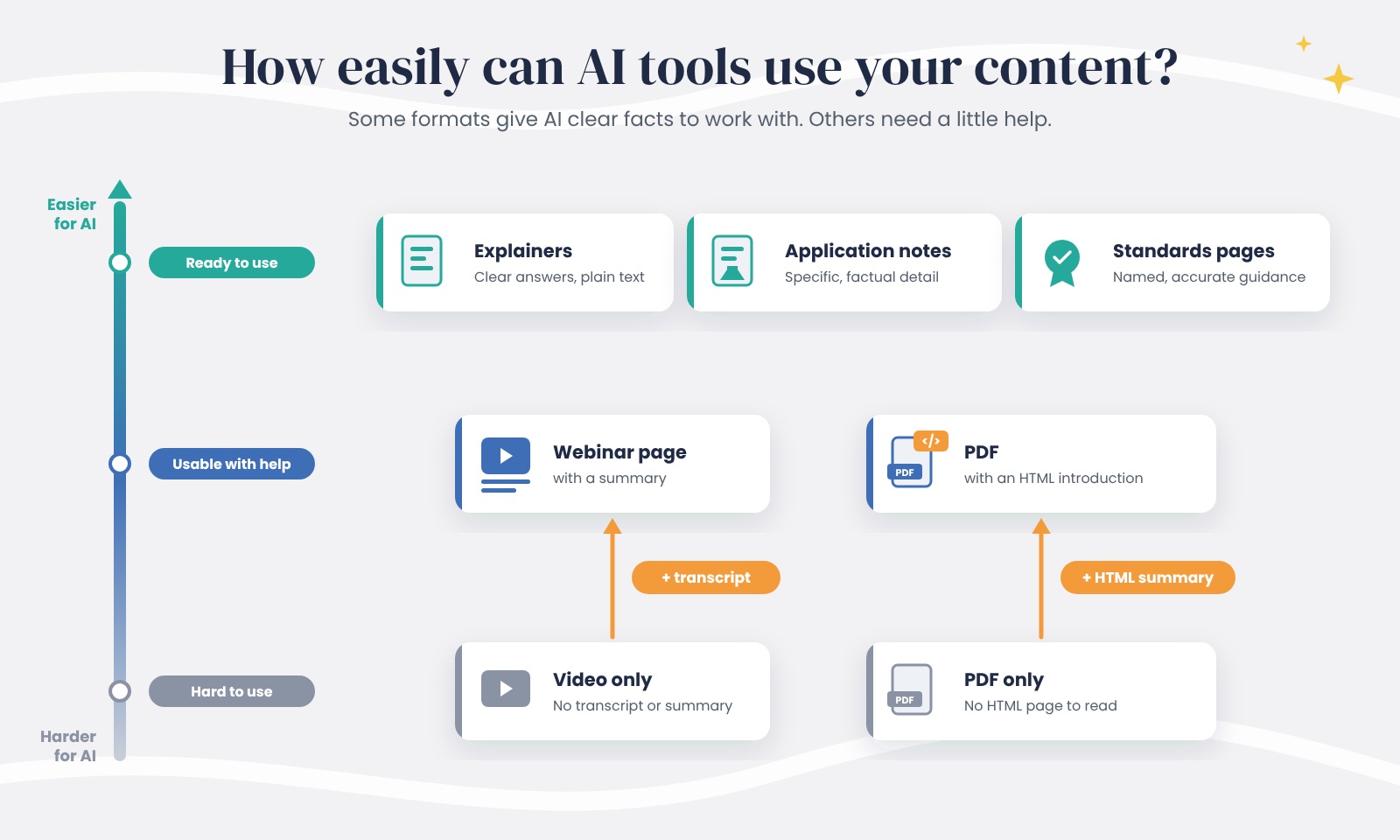
In addition, our analysis can show why certain formats perform better than others. Educational pages, application notes, explainers, and standards content give AI systems clear facts to work with. Videos and PDFs can contain excellent information too, but they are harder to use when the page lacks a transcript or summary.
Breaking Down the AI Visibility Report
So, what does the AI visibility report actually include? Delivered as a PDF, it shows marketing teams how their brand performs across AI search, where the gaps are, and what they can improve. Here’s what it covers:
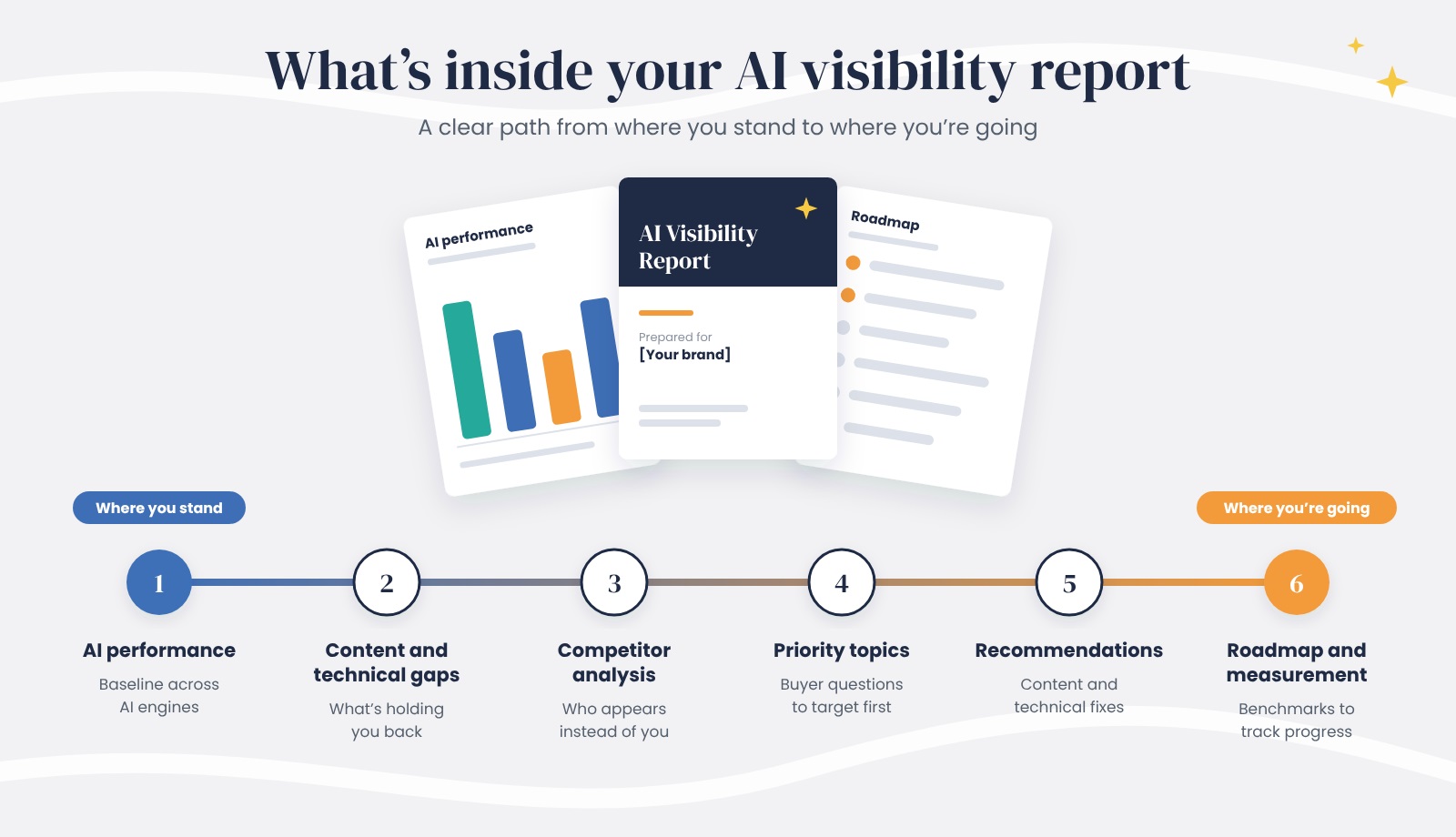
- AI performance: a baseline across different AI engines, including citations and brand mentions
- Content and technical gaps: issues that may be limiting performance and buyer questions your content doesn’t currently address
- Competitor analysis: the topics and content approach helping competitors appear in AI answers
- Priority topics: buyer questions grouped into content clusters based on relevant opportunities
- Recommendations: suggested content, technical improvements, and GEO best practices
- Roadmap and measurement: next steps and benchmarks for tracking progress over time
Taken as a whole, the different sections of the AI visibility report connect your current AI performance with the content, technical, and competitive factors behind it. This gives teams a clear path from where they stand now to their next SEO and GEO steps.
How Can the AI Visibility Report Help Your Marketing?
Once you have data on citations, brand mentions, competitor appearances, and content performance, it becomes easier to decide where to focus marketing efforts.
Our AI visibility report can help teams:
- Find buyer questions where new content could strengthen authority, especially around standards, regulations, applications, and comparisons
- Identify pages that already earn citations and could benefit from updates or stronger brand context
- Compare visibility with genuine competitors rather than broad companies that distort the raw data
- Spot countries or regions where local content is missing
- See which platforms respond best to different content formats
- Build a baseline to track changes in citations, mentions, and topic coverage over time
The AI visibility report’s findings give teams something concrete to act on. A clear gap or existing strength could lead to a new standards explainer, a transcript and summary for a webinar, improvements to a high-performing page, or new content for a market where brand presence is limited. It measures performance, but its real value is in guiding what you create next.
Transforming Insights Into a GEO Content Plan
Good GEO content doesn’t need to sound like it was written for a machine. The aim is to make useful technical information easier to find, understand, and quote.
When creating content for GEO, AZoNetwork follows six practical rules:
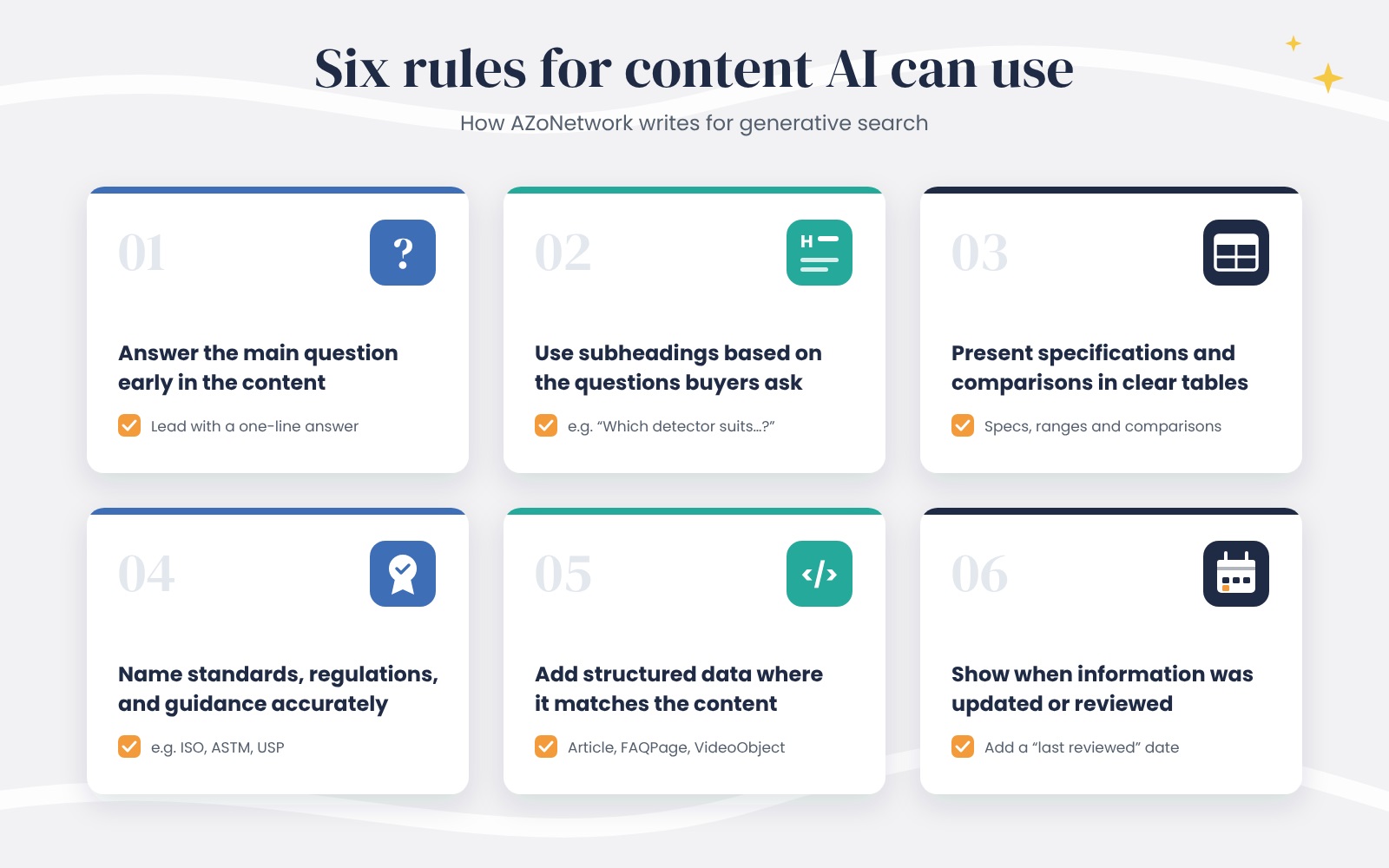
- Answer the main question early in the content
- Use subheadings based on the questions buyers actually ask
- Present specifications and comparisons in clear tables or boxes where useful
- Name relevant standards, regulations, and guidance accurately
- Use structured data (Article, FAQPage, VideoObject) where it matches the content, to make page structure explicit
- Show when technical information was updated or reviewed
GEO can help you get more from the content you’ve already created. For example, adding a transcript and short summary can make webinar information easier to find and use. Additionally, you can support a technical PDF with an HTML introduction that explains what it covers and highlights the most useful information. You can also reinforce existing articles with related content from trusted scientific publications, giving AI systems more context about a brand and its expertise. Coverage on specialist sites such as AZoM, AZoNano, AZoLifeSciences and News-Medical is a good example: independent, well-structured technical content that links your brand with the topics your buyers care about.
Why SEO and GEO Need Each Other
GEO has become important as buyers turn to AI platforms for information, but it doesn’t replace SEO. SEO and GEO are closely connected, and many of the fundamentals that help content perform in search also make it easier for AI systems to find, interpret, and use.
| Area |
SEO |
GEO |
What they have in common |
| Content |
Addresses relevant search queries and buyer intent |
Helps AI systems identify useful information for generated answers |
Both rely on accurate, well-structured content that answers genuine buyer questions |
| Website structure |
Enables search engines to crawl and index pages |
Makes important information easier for AI systems to locate and process |
Clear headers, internal links, and logical page structures benefit both |
| Authority |
Earns links and topical authority signals |
Associates a brand with particular subjects and areas of expertise |
Strong technical content and credible external coverage can contribute to both |
| Measurement |
Tracks rankings, impressions, clicks, and organic traffic |
Tracks citations, brand mentions, and appearances in AI-generated answers |
Looking at these metrics side by side shows the different ways buyers may encounter a brand through search |
This overlap is why our SEO team doesn’t treat GEO as a separate area of work. SEO helps ensure useful content can be found, indexed, and matched with relevant searches, while GEO looks at how AI platforms pick up and present that content. By considering both, the team can see where existing SEO work is already contributing to AI visibility and where there may be opportunities to improve.
Frequently Asked Questions
What is the difference between a citation and a mention?
A citation is when an AI tool uses one of your pages as a source for its answer. A mention is when your company is named in the answer itself. You can have one without the other, which is why the report tracks them separately.
Which AI platforms does the report cover?
The report tracks buyer questions across ChatGPT, Gemini, Google AI Overviews and Google AI Mode, and can compare results across different markets.
Does GEO replace SEO?
No. Most of what helps a page rank in search also helps AI tools find and trust it. The AI visibility report sits alongside your existing SEO metrics rather than replacing them.
What format is the report delivered in?
The report is delivered as a PDF covering AI performance, content and technical gaps, competitor analysis, priority topics, recommendations, and a roadmap for measuring progress.
Building Search Visibility With AZoNetwork
AZoNetwork integrates SEO, GEO, and AI visibility reporting into one search visibility service. Our SEO work covers research, technical performance, on-page improvements, content development, authority building, and performance tracking through AZoIntel. Alongside these established SEO measures, the AI visibility report shows how your visibility extends into generative search, including where your brand appears and when AI platforms use your content.
Want to see how your brand appears across traditional search and AI-generated answers?
Speak to AZoNetwork about a Digital Marketing Report which includes: AI Visibility, Technical Website Health, SEO Visibility and a Competitor Analysis.
