
Lab equipment purchases rarely happen because someone saw one good ad.
They happen because the right people find the right evidence at the right time, and because that evidence holds up to scrutiny from more than one direction. For science marketers, that’s what makes instruments different from simpler products. You’re not only generating awareness; you’re helping a buying group move from interest to confidence, to approval.
That process is rarely linear. A researcher may start by trying to solve a technical problem in the lab. Procurement may enter later with a completely different set of questions about supplier reliability, documentation, service support, and commercial risk. Both shape the final decision, and both need different kinds of proof.
That distinction changes how you should think about channels.
The question isn’t simply which channel performs best. It’s which channel helps researchers discover and validate an instrument, which channel helps procurement assess and approve it, and where those touchpoints connect. The most effective strategy isn’t built around a single channel; it’s built around the buying journey.
Why One Marketing Channel Is Rarely Enough
Lab equipment buying is a high-consideration purchase. It often involves technical evaluation, internal discussion, budget review, and supplier approval before a purchase can move forward. That means a channel that works well for visibility may not support evaluation. Equally, a channel that helps move a deal through procurement may do little to create initial demand.

Researchers and procurement managers are usually answering different questions.
Researchers ask whether the instrument will improve the quality, speed, or reliability of their work. They want to know how it performs, how it fits into their workflow, and whether there’s evidence behind the claims.
Procurement tends to ask something else: Can the supplier deliver reliably? Are the terms clear? Is the documentation ready? Will this purchase create friction later through service, compliance, or onboarding?
If those audiences need different proof, they won’t respond to the same channels in the same way. Channel planning should start with the decision process, not a menu of tactics.
Before Choosing Channels, Map the Buying Journey
A common mistake in science marketing is treating all channel activity as if it serves the same purpose. In reality, awareness isn’t evaluation, and evaluation isn’t approval.

For lab equipment, it helps to think in four stages:
- Discovery, where someone becomes aware of an instrument or supplier while exploring a problem, method, or application.
- Technical evaluation, where researchers compare options, review data, attend demos, and decide whether a system is worth pursuing.
- Commercial validation, where stakeholders review supplier information, pricing structure, service terms, and risk.
- Purchase readiness, where the organization moves toward quote approval, onboarding, or vendor setup.
Seen this way, channel choice becomes practical. Some channels drive discovery, others build credibility during evaluation, and others remove friction when the purchase moves into formal review. The best mix keeps buyers moving from one stage to the next.
Channels That Help Researchers Discover and Evaluate
Researchers usually start with a need, not a brand. They’re trying to solve a problem, improve a workflow, or assess whether a different approach could produce better results.
Search Creates Discovery
For many researchers, search is the first step—and they’re rarely searching for a supplier name. They’re searching around challenges, methods, and use cases.
They might look for ways to reduce background fluorescence, increase sample throughput, monitor freezer conditions, or compare instrument types for a specific application. This is where search visibility matters, but only when the content is built around real technical questions.
Strong search-led content does more than describe a product. It explains the problem the instrument helps solve, shows where it fits in a workflow, and gives enough detail for a researcher to decide whether it’s worth investigating further.
Visibility is only the first step. Credibility is the next test.
Scientific Publishing Builds Credibility
High-value equipment decisions are rarely made on product pages alone. Researchers often want to see instruments discussed in a more technical, independent-feeling environment before engaging with a supplier.
That’s where scientific media, sponsored editorial, interviews, and application-led content can be effective. These formats provide context. They help buyers understand not only what an instrument does, but where it fits within a broader scientific conversation.
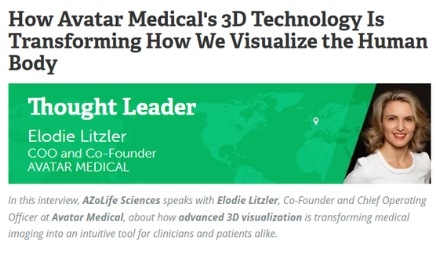
This matters even more in crowded categories, where multiple suppliers appear to offer similar capabilities. In those markets, credibility comes from relevance, expertise, and scientific fit—not just features.
If search helps a prospect find you, scientific content helps them take you seriously.
AZoNetwork can support this by placing products, expertise, and application-led content alongside the articles and technical resources researchers already use. That continuity makes the jump from discovery to evaluation feel natural.
Webinars Deepen Evaluation
Once interest is established, buyers often want more than static content. They want explanation, proof, and a sense of how an instrument behaves in real applications.
Webinars remain a strong channel because they combine technical depth with live engagement. They let prospects hear the reasoning behind a method, see data discussed in context, and ask questions that relate to their own work.
Learn more about Webinars and Deep engagement here
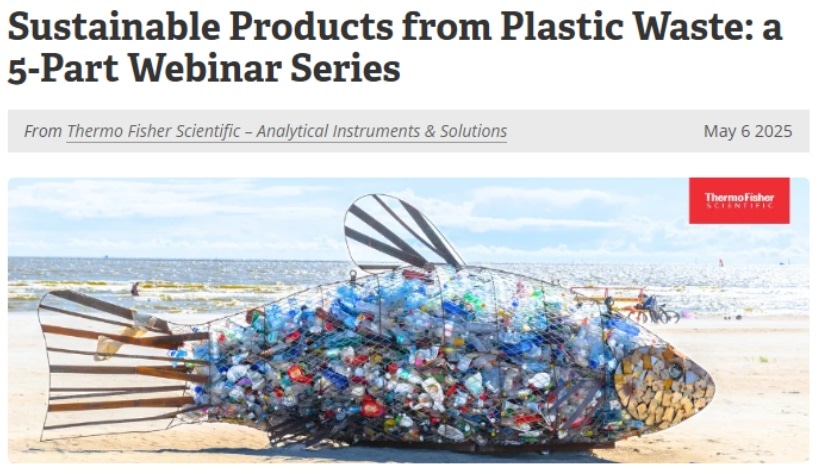
Webinars tend to work best when focused on a clearly defined use case, rather than a broad product overview. In many cases, a recurring webinar series outperforms a one-off launch because it builds familiarity over time and can follow audience needs.
Events Accelerate Comparison
With complex or capital-intensive equipment, buyers often want direct interaction. Conferences and trade shows still matter because they allow researchers to compare suppliers in a short time, speak with specialists, and see technology outside a purely digital environment.
By the time a prospect reaches your booth, much of the marketing work should already have been done. The strongest event strategies are supported before and after the show: pre-event activity to book meaningful conversations, and post-event follow-up that connects interest to the next step (demo, technical consultation, or quote).
Channels That Help Procurement Move Toward Approval
Technical interest doesn’t automatically become a purchase. Once an instrument is under consideration, commercial scrutiny often starts.
This is where marketers sometimes lose the thread: assuming that once the researcher is interested, the work is done. In practice, this is often when the process becomes harder.
Procurement-Ready Content Removes Friction
If researchers need proof that the instrument performs, procurement needs proof that the supplier can deliver.
Documentation, consistency, and clarity matter. Procurement teams often work through formal processes involving supplier registration, approval routes, compliance checks, and contract validation. Progress can stall if key information is hard to find or incomplete.
Treat procurement-ready information as a marketing asset, not only an operational requirement. That can include warranty details, service terms, lead times, cybersecurity policies, tax forms, sustainability statements, certifications, and clear SKU structures. At this stage, the barrier is rarely awareness—it’s friction.
Targeted Email Supports Committee-Based Decisions
Lab equipment decisions are often shaped by several people. Even when a researcher initiates, the final decision may involve lab managers, finance, procurement, and senior approvers.
Targeted email remains useful because it can deliver the right information to the right stakeholder at the right time. A researcher may need application data or a recorded webinar; procurement may need a landing page with service terms, documentation, and supplier onboarding steps.
Email works best when it reflects that difference.
For suppliers trying to reach scientific and commercial stakeholders in parallel, targeted distribution through trusted sector audiences can help keep content relevant to each role. Used well, email becomes a coordination channel rather than a broadcast tool.
LinkedIn Reinforces Supplier Credibility
LinkedIn is often treated as a top-of-funnel channel, but in high-consideration buying it plays a later-stage role. As evaluation becomes serious, buyers check the supplier behind the product: company focus, stability, and the signals that suggest the business can support a long-term purchase.
LinkedIn’s value is often reassurance rather than persuasion. A clear company page, relevant leadership profiles, and credible updates can help remove doubt during review.
Retargeting Keeps Momentum Alive
Buying cycles are rarely short. Internal reviews and budgets take time, and interest can go quiet for weeks even when an opportunity is still active.
Retargeting helps maintain visibility between moments of active engagement. It works best when it supports richer content rather than trying to replace it. Display ads won’t usually move a capital purchase on their own, but they can reinforce messages already encountered through editorial, webinars, product pages, or email.
Retargeting isn’t there to do the heavy lifting; it helps keep the thread intact.
What the Best Channel Mix Actually Looks Like
The best channel mix isn’t a researcher channel plus a procurement channel chosen in isolation. It’s a connected system.

A strong strategy might begin with search or scientific editorial to create discovery among researchers working on a technical challenge. That interest can then be developed through webinars, expert-led content, or events that support deeper evaluation.
As the opportunity matures, targeted email and structured landing pages help internal stakeholders share information. Procurement-ready documentation reduces friction during formal approval. LinkedIn and retargeting help maintain confidence while the decision process unfolds.
What matters isn’t that every prospect touches every channel. What matters is that the channels work together.
Measure Performance in a Way That Matches Buying Reality
Not all engagement signals mean the same thing.
A webinar registration from a researcher isn’t equivalent to a supplier pack download from a procurement contact. A return visit to a technical page tells you something different from a request for a quote.
For researcher-focused activity, useful signals may include content downloads, webinar registrations, demo requests, and repeat visits to application-specific pages.
For procurement-focused activity, stronger indicators may include visits to compliance or service pages, downloads of supplier documentation, quote requests, and onboarding-related actions.
Attribution should reflect that complexity. Long buying cycles are shaped by multiple touchpoints across different teams. A channel shouldn’t be judged only on whether it produced a direct lead; it should also be judged on whether it moved an account toward the next meaningful step.
Where AZoNetwork Fits
For science companies, the challenge is often less about finding one perfect channel and more about building continuity across the buying journey.
AZoNetwork can support several stages that matter most: scientific content discovery, technical credibility, targeted audience reach, and continued visibility within a trusted publishing environment. For marketers trying to connect scientific evaluation with commercial progression, that kind of ecosystem can outperform a disconnected set of one-off activities.
.jpg)
Bringing It All Together
Promoting lab equipment effectively means accepting a simple truth: the person who wants the instrument and the person who approves the purchase are not always looking for the same thing.
Researchers need confidence that a system will help them do better science. Procurement teams need confidence that the supplier can support a sound purchase. The strongest channel plans reflect both.
That’s why the best strategies don’t treat SEO, editorial, webinars, email, events, LinkedIn, and retargeting as separate tactics competing for budget.
They treat them as connected touchpoints in a shared journey from discovery to validation to approval.
When that journey is supported properly, marketing does more than generate leads. It helps a buying decision move forward.
AZoNetwork will be attending Analytica (Munich), CHEMUK (Birmingham) and The Battery Show EU (Stuttgart) and would welcome the chance to discuss how science companies can build channel strategies that reflect the real purchasing process behind lab equipment sales.
If your goal is not just to be seen, but to be chosen, that’s the conversation worth having.
Discuss Your Strategy with Us today