Not every lead in your CRM is ready to buy. Some are actively evaluating solutions. Others are early in their research. A few are just browsing. The challenge is knowing the difference quickly enough to act on it.
That's where lead scoring comes in.
What Is Lead Scoring?
Lead scoring is the process of ranking prospects against each other using an objective, agreed-upon methodology. Each lead is assigned a score based on a combination of who they are and how they've behaved, giving your team a reliable, data-driven way to prioritize their time.
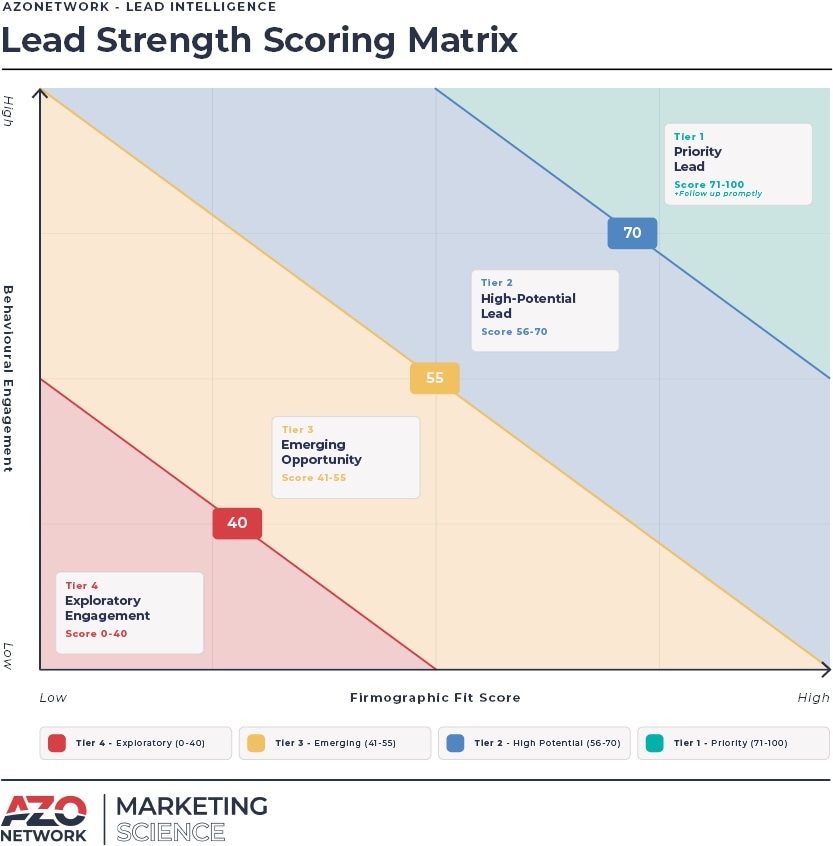
At its core, lead scoring answers two questions: is this person a good fit for your business, and are they showing genuine buying intent? The better your answers to both, the stronger the lead.
Why Does It Matter?
Without lead scoring, most teams default to working through leads in the order they arrived. It's an understandable approach, but not an efficient one. A high-value prospect who submitted a detailed inquiry yesterday can easily get buried under a wave of earlier, lower-quality contacts.
Lead scoring changes that. By surfacing the leads most likely to convert, it lets your sales team prioritize strategically rather than chronologically. Less time on admin. More time on the conversations that matter.
The benefits go further than efficiency. When both sales and marketing agree on what makes a quality lead, handoffs become smoother, and feedback becomes more meaningful.
Lead scoring gives both teams a shared language and a shared standard. It also makes your pipeline more predictable: the better you understand lead quality, the more accurately you can forecast revenue and spot shortfalls early. And when your salespeople know where a lead is in their journey, they can approach them with the right message at the right time, rather than treating every contact the same.
Explicit and Implicit Scoring
Most lead scoring models draw on two types of signals.
Explicit signals relate to who someone is:
- Their job title
- Seniority
- Industry
- Company size
- How well they match your ideal customer profile.
These tell you whether a lead is the right kind of person to talk to.
Example:

Implicit signals relate to what someone has done:
- The pages they've visited
- The content they've downloaded
- The forms they've filled in.
These reflect genuine interest and buying intent, and they tend to carry more weight the further down the funnel they sit.
A robust scoring model weighs both. A senior decision-maker who has only visited your homepage once is a very different prospect from a mid-level buyer who has downloaded three resources and submitted an inquiry.
Putting It Into Practice
For B2B organizations, the stakes are higher. Sales cycles are longer, more stakeholders are involved, and the cost of chasing the wrong leads adds up fast. A clear, consistent scoring methodology means your team always knows where to start and why.
The key is having the right data, in the right place, at the right time. That's exactly what we've built.
Lead Scoring Is Now Built Into AZoIntel
Lead Scoring is now a native feature of AZoIntel, AZoNetwork's all-in-one platform for lead management and campaign performance. From content and eBook reporting to website analytics, everything is in one place.
Learn more about AZoIntel
Every lead is now automatically scored in real time, giving your team an instant view of who to prioritize and why. Each contact receives a score that reflects both who they are and how engaged they've been, so there's no ambiguity about where to focus first.
Leads are automatically placed into one of four tiers, each giving your team a clear signal about where a contact sits in their journey:
- Tier 1 - Priority Lead: Strong fit with meaningful engagement. Follow up promptly.
- Tier 2 - High-Potential Lead: Good fit or strong engagement. Worth prioritizing for outreach.
- Tier 3 - Emerging Opportunity: Moderate signals. Monitor for further engagement.
- Tier 4 - Exploratory Engagement: Early-stage or lower-fit. Don't prioritize, but don't ignore.
Rather than working through a list chronologically, your team can go straight to the contacts that matter most and tailor their approach accordingly.
Lead Scoring also builds a picture of engagement over time, not just individual moments. Each contact has a Lifetime Score that grows with every interaction, making it easy to surface prospects who've shown sustained interest over weeks or months, even when no single touchpoint stood out.
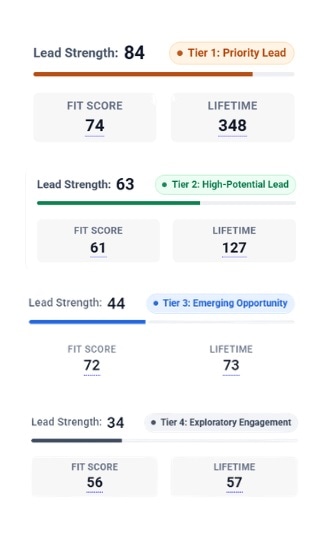
When you export your lead data, each interaction comes with a priority score. Sort by that column and your highest-priority interactions rise straight to the top, which makes a real difference when you're working through a large list. And wherever you see a score in the portal, you can hover over "Explain this score" for a plain-English summary of how it was calculated. Full transparency, no guesswork.
If you're not yet using AZoIntel, we'd love to show you what it can do. Get in touch with our team to find out how it can work for your campaigns.
Want to start scoring your leads? Your Account Manager will be happy to walk you through scoring in more detail and set it up for your account.
Find out more about lead scoring